


 Fire
Fire Smoke
Smoke Extinguisher
 Fire
Fire Safety
 Fire
Fire
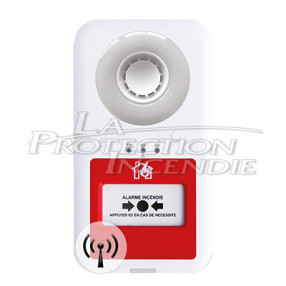
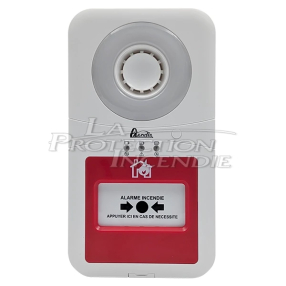
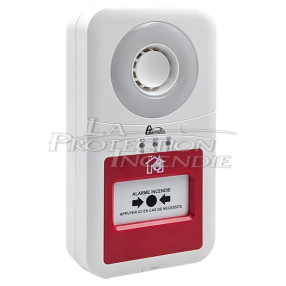
This Type 4 battery-powered radio alarm transmits alerts via radio waves between its interconnected elements, with a theoretical range of 2,000 m in open field .
It incorporates a 90 dB audible alarm , a white flashing light signal and a manual trigger , and accepts up to 32 paired devices .
| Product | Reference | Landmark | Designation | Price | Availability | Quantity |
|---|---|---|---|---|---|---|

|
0980R
|
- |
Price
87,45 €
HT
|
In stock
|
|
|

|
0989R-L
|
- |
Price
154,95 €
HT
|
In stock
|
|
|

|
0989R-S
|
- |
Price
157,15 €
HT
|
In stock
|
|
|

|
0989R-SL
|
- |
Price
160,45 €
HT
|
In stock
|
|
|

|
0548-12u
|
- |
Price
3,90 €
HT
|
In stock
|
|
This Type 4 battery-powered wireless alarm is an interconnected system that transmits alerts via radio waves between its components. Modules equipped with a repeater act as master relays and propagate the signal throughout the network, simplifying deployment on long sites or those requiring more than 10 alert points. The theoretical range in open field is 2,000 m; the presence of obstacles or interference can reduce this range in real-world environments and should be considered when positioning the components.
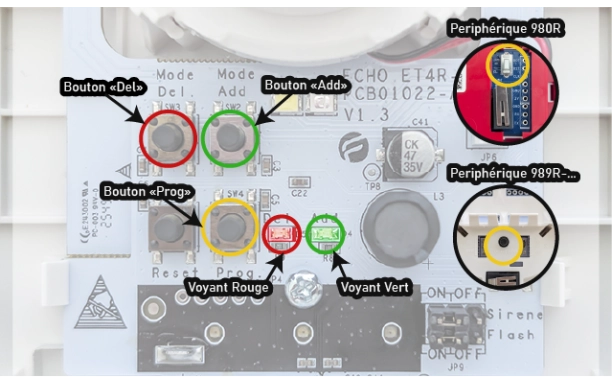
The device is operational as soon as the batteries are inserted and accepts up to 32 paired devices . The control panel receives alarms from radio manual call points (980R, 987R) and activates compatible sound or light alarms (989R-S, 989R-L, 989R-SL).
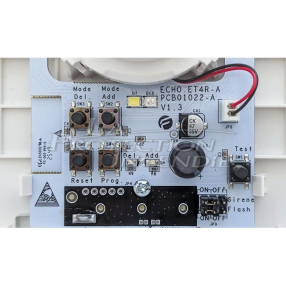
Pairing requires placing the different components side by side, then initiating the process via the "Add" mode on the control panel (entering the mode indicated by the flashing green light), followed by three presses of the button on the slave device (the button varies depending on the device; on this device used in slave mode, it is the "Prog" button). The control panel confirms with a sequence of beeps and/or flashes:
1 = Paired
2 = Failure
3 = Already paired
4 = Maximum device capacity reached
0 = Communication problem.
Repeat the operation for each device while keeping the control unit in pairing mode, then exit the "Add" mode on the control unit.
Unpairing follows the same procedure via the "Del" function (Entering the mode indicated by the flashing red light) followed by three presses on the button of the slave device; the control unit confirms with a sequence of beeps and/or flashes:
1 = Mismatched
2 = Failure
0 = Communication problem.
Repeat the operation for each device while keeping the control unit in unpairing mode, then exit the "Del" mode on the control unit.
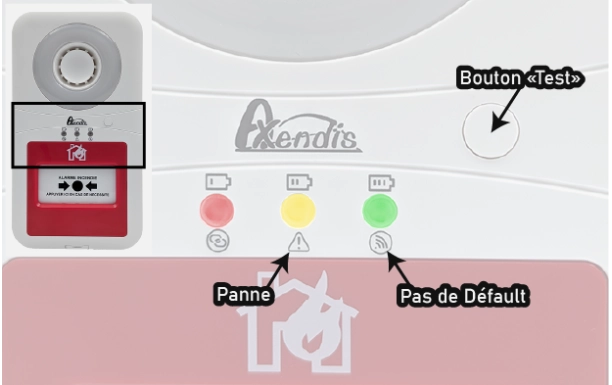
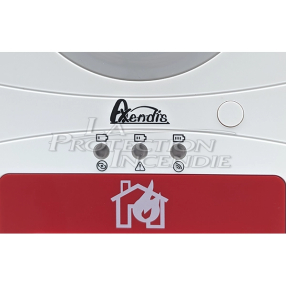
The test button located to the right of the logo checks the battery status indicated by the LED color:
Green = Correct
Yellow = Medium
Red = Low
And identifies the device mode:
4 beeps/flashes = master
2 beeps/flashes = peripheral
A long press for 5 seconds initiates a radio diagnostic of all peripherals, indicated by:
Green = No defects
Yellow = Defect.
Three short presses activate Bluetooth to connect to the "AXEtype4" application (App Store / Play Store), which displays fault information and facilitates network monitoring.
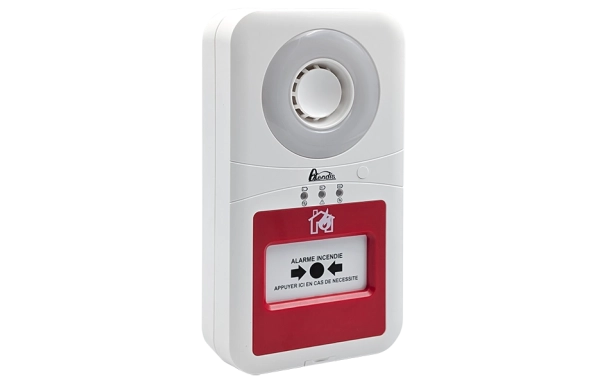
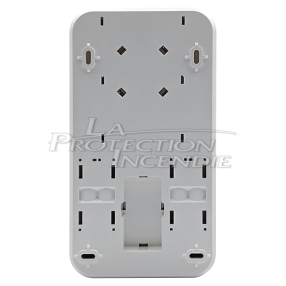
- Material: ABS plastic
- Height: 220 mm
- Width: 120 mm
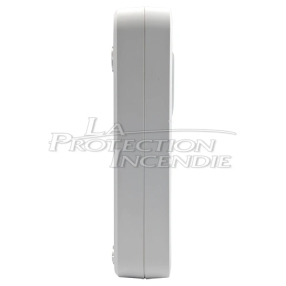
- Depth: 50 mm
- Weight: 0.356 kg (without battery)
- Operating Temperature: -10°C to +55°C
- Sound power: 90 dB at 2m
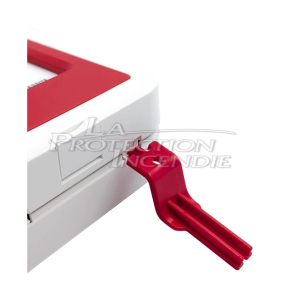
- Signal Duration: 5 minutes unless stopped with the key
- Light Signal: White Flash 1 Hz
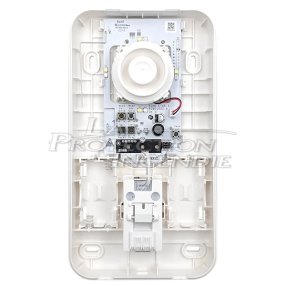
- Power supply: 2 AA Lithium batteries (Included)
- Battery life: 3 years (including trials)
- Protection rating: IP30 / IK06
- Use: indoor
- Connectable Peripherals: 32
- Theoretical range: 2,000 m in open field
- Other: Screws, Opening and Resetting Key
- Warranty: 12 months
- Packaging: Sold individually